
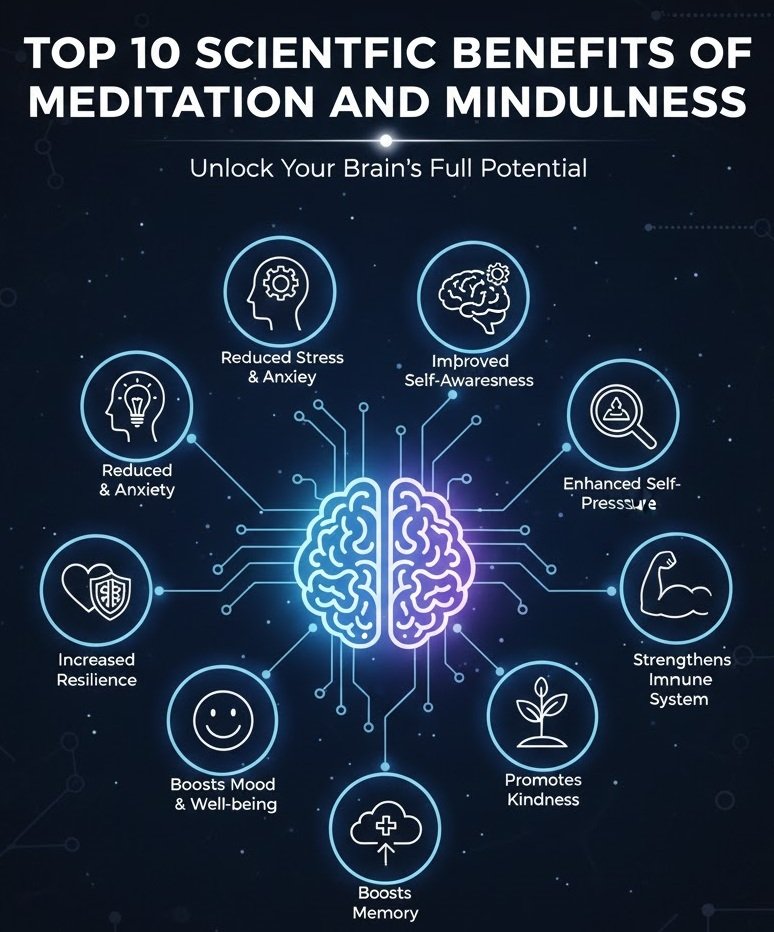
In today’s fast-paced world, stress, anxiety, and mental fatigue have become common problems. Many people are now turning to meditation and mindfulness, not just as spiritual practices, but as science-backed tools for better mental and physical health. Research from neuroscience, psychology, and medical science clearly shows that meditation is more than a trend — it’s a powerful habit with lasting benefits.
Let’s explore the top 10 scientific benefits of meditation and mindfulness, backed by research and explained in a simple, human way.
1️⃣ Meditation Reduces Stress at the Brain Level
One of the most researched benefits of meditation is stress reduction. Studies show that mindfulness meditation lowers cortisol, the stress hormone. Regular practice helps calm the amygdala — the part of the brain responsible for fear and stress responses.
2️⃣ Improves Focus and Concentration
Scientific studies reveal that meditation strengthens the brain’s attention networks. Just 10–15 minutes a day can improve focus, memory, and mental clarity.
This is why mindfulness is often recommended for students, professionals, and anyone dealing with distractions.
3️⃣ Supports Emotional Balance

Meditation helps regulate emotions by improving communication between different brain regions. People who meditate regularly experience fewer mood swings and better emotional control.
This is one major benefit of mindfulness — you respond thoughtfully instead of reacting impulsively.
4️⃣ Enhances Mental Health
Research shows meditation can reduce symptoms of:
Anxiety
Depression
Burnout
Mindfulness-based therapies are now widely used in clinical psychology because of their proven results.
This clearly shows how meditation is helpful for long-term mental well-being.
5️⃣ Improves Sleep Quality

Mindfulness meditation helps relax the nervous system, making it easier to fall asleep and stay asleep. Studies indicate improved sleep quality and reduced insomnia in people who meditate consistently.
Better sleep also leads to improved energy and mood during the day.
6️⃣ Strengthens Brain Structure
Brain imaging studies show that meditation increases gray matter density in areas related to learning, memory, and self-awareness.
This proves that mindfulness scientific benefits include actual physical changes in the brain.
7️⃣ Boosts Immune System
Scientific research suggests meditation can strengthen immune function by reducing inflammation and improving the body’s response to illness.
A calmer mind helps the body heal faster and stay healthier.
8️⃣ Improves Heart Health

Meditation helps lower blood pressure and improves heart rate variability. These benefits reduce the risk of heart disease and support overall cardiovascular health.
Doctors now recommend mindfulness as part of a heart-healthy lifestyle.
9️⃣ Helps Manage Chronic Pain
Mindfulness meditation doesn’t eliminate pain, but it changes how the brain processes pain signals. Research shows reduced pain perception in people practicing meditation regularly.
This makes meditation a valuable tool for managing chronic pain conditions.
🔟 Builds Self-Awareness and Mindful Living
Meditation improves awareness of thoughts, habits, and behaviors. This increased self-awareness helps people make healthier lifestyle choices and develop positive habits.
This is one of the most powerful and lasting benefits of mindfulness.
Final Thoughts
Science clearly supports what ancient practices have taught for centuries — meditation and mindfulness can transform your mental, emotional, and physical health. You don’t need hours of practice; even a few mindful minutes each day can create meaningful change.